

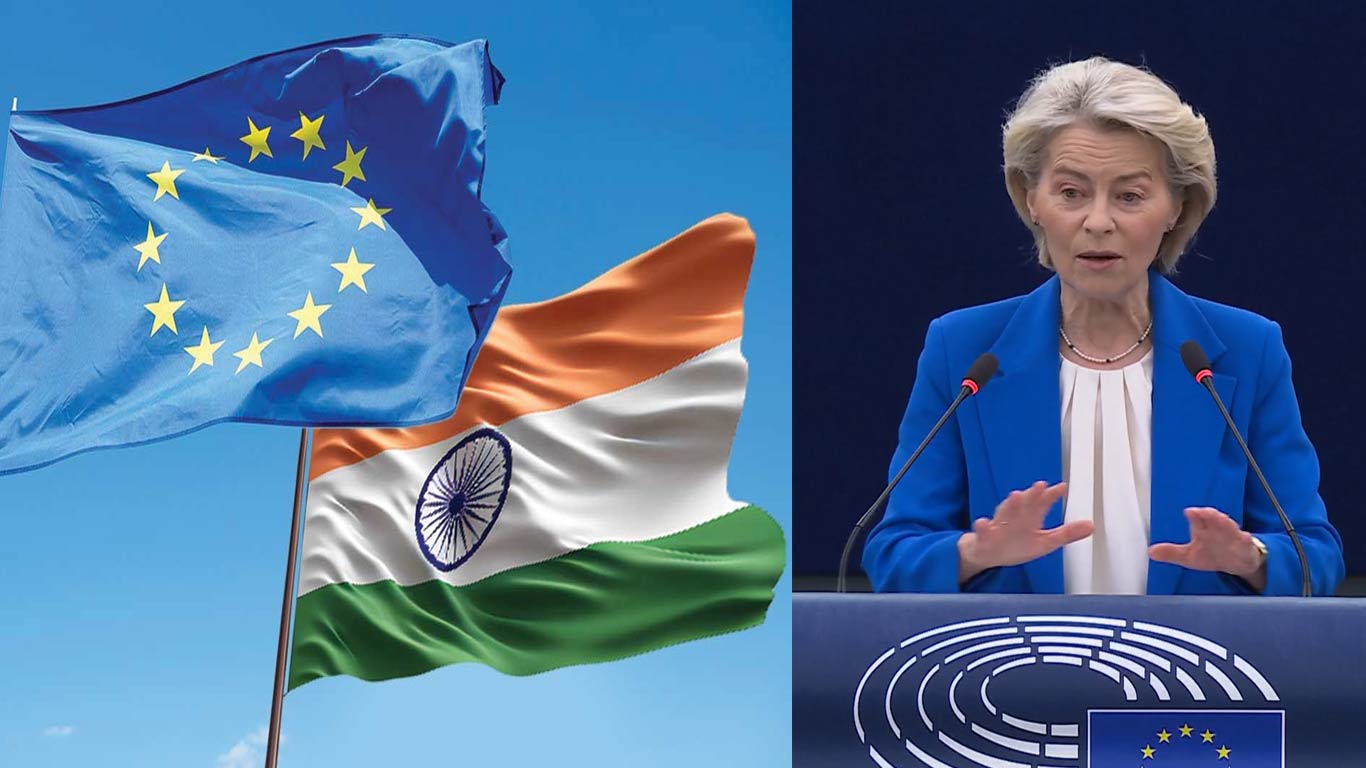
NEW DELHI — India and the European Union are closing in on an India EU trade deal that would cut import duties on some EU-built cars to 40% from as high as 110%, people briefed on the negotiations said, as soon as Tuesday. The move is designed to unlock a broader pact covering goods, services and trade rules after years of stop-start talks, Jan. 26, 2026.
According to a Reuters report, the 40% rate would apply immediately to a limited number of combustion-engine cars with an import price above 15,000 euros (about $17,700), with duties later stepping down toward 10%. One source said India floated a quota of about 200,000 vehicles a year.
Electric vehicles would be excluded from any tariff cut for the first five years, the sources said, as India seeks to protect local EV investments. European brands such as Volkswagen, Mercedes-Benz and BMW currently hold less than 4% of India’s roughly 4.4 million-car annual market.
India EU trade deal: what the proposed car tariff cut could look like
People involved in the talks describe autos as one of the most politically sensitive pieces of the India EU trade deal, because India has long used high duties to encourage local assembly. A lower tariff, even with quotas, would give European carmakers more room to sell imports and gauge demand.
The car offer is only one slice of the India EU trade deal. A separate Reuters explainer said both sides are still negotiating the overall scope of tariff cuts, as well as services access, data rules and the EU’s carbon border measures. Any agreement announced this week would still face legal review and ratification, including a vote in the European Parliament.
European Council President António Costa and European Commission President Ursula von der Leyen are due to meet Indian Prime Minister Narendra Modi at the 16th EU-India summit in New Delhi, Jan. 27, the European Council said. Costa called India “a crucial partner for the EU,” as officials frame the push as part of a broader strategy to deepen ties.
In a Jan. 10 statement, the Press Information Bureau said Commerce and Industry Minister Piyush Goyal and EU Trade and Economic Security Commissioner Maroš Šefčovič urged teams to “narrow divergences” and accelerate a “fair, balanced, and ambitious agreement.”
The India EU trade deal effort dates back to talks launched in 2007 and frozen in 2013, according to a 2022 Reuters report. Leaders agreed at a 2021 virtual summit to restart negotiations, Reuters reported, and the European Commission said the talks were formally relaunched in June 2022 with an initial goal of concluding them by the end of 2023, the commission said.
For consumers, the key details to watch are the size of any quota, how quickly duties would fall, and whether EVs remain protected for years. Even so, the outline of the India EU trade deal suggests momentum toward a major tariff-cutting pact between New Delhi and Brussels.


