

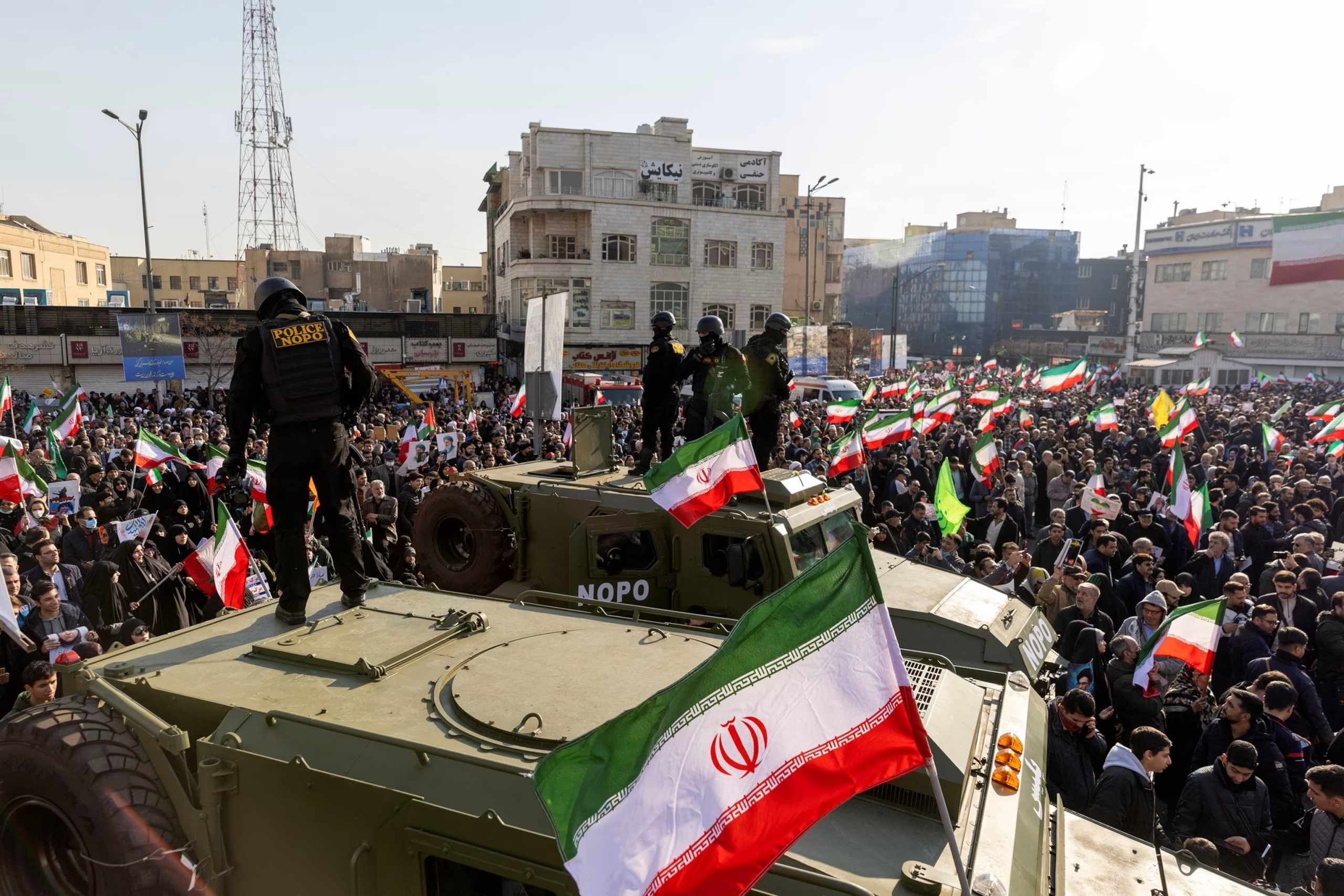
DUBAI, United Arab Emirates — Iran warned it could strike U.S. military facilities across the region if Washington attacks, as the United States began pulling some personnel from key Middle East bases amid signs of heightened force protection, Jan. 15, 2026.
U.S. officials have described the moves as precautionary, including a “posture change” at Qatar’s Al Udeid Air Base, the region’s largest American installation, where some personnel were advised to leave within hours, according to diplomats and U.S. reporting.
Iran warns neighbors hosting U.S. forces
Iran’s message was aimed as much at Gulf capitals as at Washington: Tehran has warned regional countries that host U.S. troops that their territory could become a target if the United States launches strikes, Reuters reported. Reuters reported Iran’s warning and the U.S. drawdown.
The White House has not publicly detailed any military plan, but President Donald Trump has repeatedly threatened action tied to Iran’s crackdown on unrest. The United Nations Security Council was expected to meet to hear a briefing requested by the United States, according to reporting and regional outlets.
Iran unrest, regional alerts and maritime jitters
Travel warnings have also sharpened. The State Department’s Iran advisory urges Americans not to travel there and says U.S. citizens who are in Iran should leave immediately. The State Department’s Iran travel advisory.
At sea, commercial operators have acted cautiously. Reuters reported dozens of vessels anchoring outside Iranian ports, citing elevated risk perceptions and signs of navigation interference around key waterways. Shipping data showed more vessels waiting off Iran’s ports.
AP reported that Iran has signaled swift trials for thousands detained in demonstrations, while governments in and beyond the region issued warnings and some countries adjusted embassy operations. AP reported on the latest developments and diplomatic fallout.
Iran-U.S. flashpoints that shaped today’s standoff
The current tensions build on years of escalation and restraint. In June 2025, Iran fired missiles at Al Udeid in Qatar after U.S. strikes on Iranian nuclear facilities, with Qatar and U.S. officials reporting no casualties. Reuters reported the June 2025 Al Udeid attack and regional fallout.
Earlier, in January 2020, Iranian forces launched missiles at bases housing U.S. troops in Iraq after the killing of Gen. Qassem Soleimani, underscoring how quickly Iran-U.S. crises can spill into attacks on regional facilities. A Reuters timeline detailed Iran’s January 2020 strikes in Iraq.
And in June 2019, tanker attacks in the Gulf of Oman drove oil-market anxiety and sharpened Washington’s accusations against Iran, a reminder of the economic stakes when the Gulf becomes a pressure point. Reuters reported the 2019 tanker attacks and Iran’s denial.
What comes next for Iran and the U.S.
For now, the U.S. personnel movement appears designed to reduce risk rather than signal an immediate offensive operation, but Iran’s warning raises the cost of miscalculation for U.S. partners that host American forces. With diplomacy strained and security postures tightening, the next steps may hinge on whether Washington increases pressure beyond warnings — and whether Tehran believes deterrence requires more than rhetoric.


