

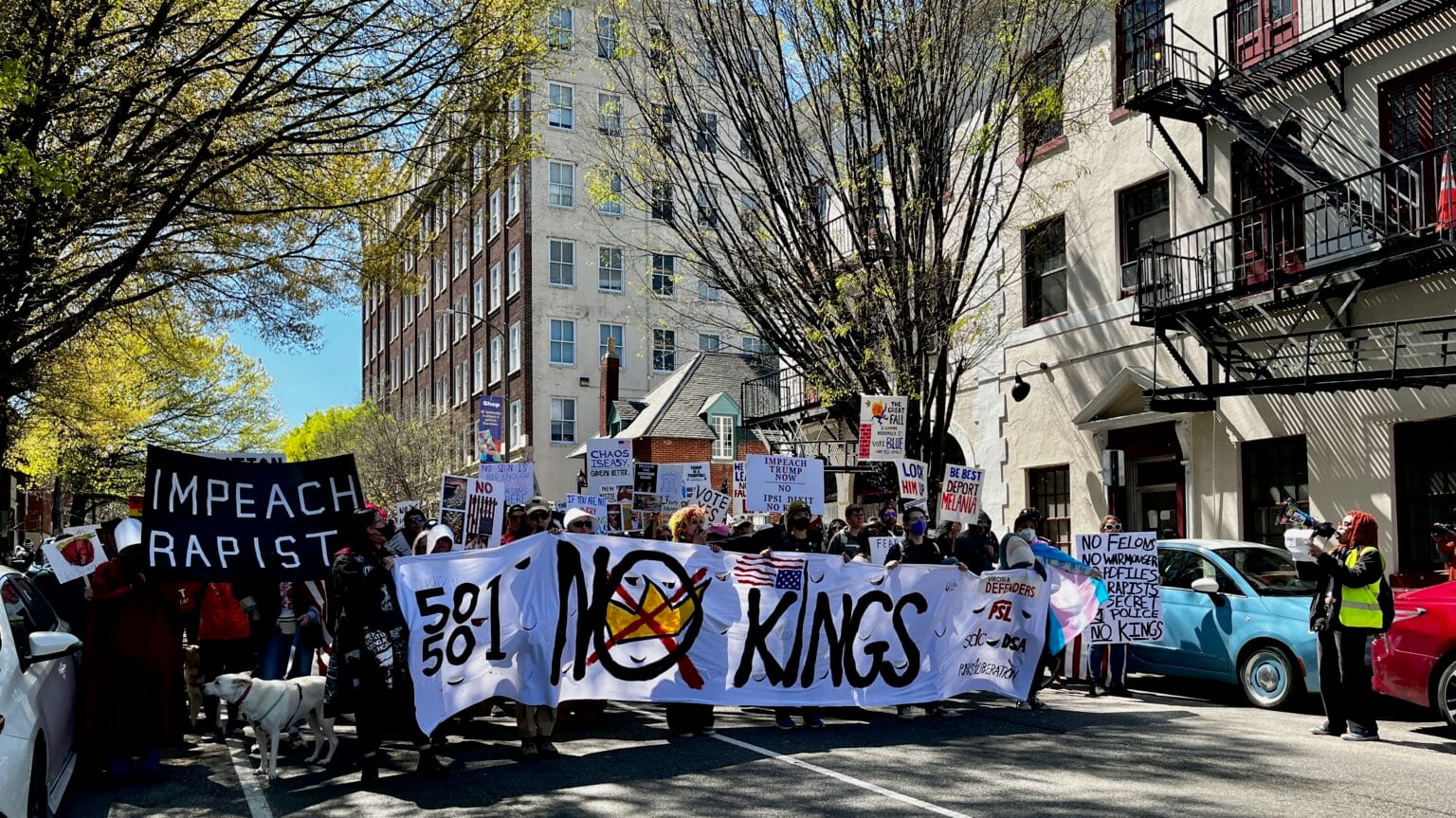
In a pre-event coalition statement, organizers said the third nationwide No Kings mobilization was expected to be one of the largest single-day nonviolent protests in U.S. history, building on earlier waves in June and October 2025. The movement has increasingly presented itself not as a one-day burst of anger, but as an ongoing campaign meant to keep pressure on the White House and its allies.
Reuters reported that more than 3,200 events had been planned and that roughly two-thirds were happening outside major cities, a nearly 40% jump in smaller-community participation from the movement’s first mobilization last June. That shift from big-city resistance to smaller-town turnout gave Saturday’s demonstrations extra political weight, especially in places where anti-Trump activism has historically been less visible.
By day’s end, AP coverage from St. Paul, Minnesota described large, mostly peaceful crowds stretching from New York and Los Angeles to rural and suburban communities, with the flagship Minnesota rally drawing national attention through appearances by Bruce Springsteen, Sen. Bernie Sanders, Joan Baez and Jane Fonda. Organizers later said turnout could approach 9 million nationwide, though that figure was not immediately independently verified.
Why the No Kings protests are reaching beyond big cities
Another sign of the movement’s staying power came before marchers even took the streets: AP reported ahead of the demonstrations that suburban sign-ups were surging and that many of the planned events were clustered outside traditional urban protest hubs. When opposition spreads into swing-district suburbs and smaller communities, it becomes harder for the administration to dismiss the protests as a familiar big-city spectacle.
The White House and Republican allies tried to brush off the demonstrations as partisan theater, but the geographic sprawl of the rallies told a different story. Families, first-time protesters, veteran activists and local organizers all showed up under the same banner, signaling that the anti-Trump coalition is becoming less concentrated and more durable.
How the No Kings protests grew from 2025 to now
The movement’s expansion did not begin this week. The first nationwide wave in June 2025 rose alongside Trump’s military parade in Washington, while another national round in October 2025 showed the protests could return at scale instead of fading after a single peak. Saturday’s turnout suggested that what began as a symbolic answer to parade politics has evolved into a recurring mobilization against executive overreach.
Whether that energy turns into measurable electoral consequences remains unclear. But the latest demonstrations showed that the No Kings label has moved beyond a slogan and into a repeatable organizing network, one capable of pulling people back into the streets across red, blue and purple communities alike.


