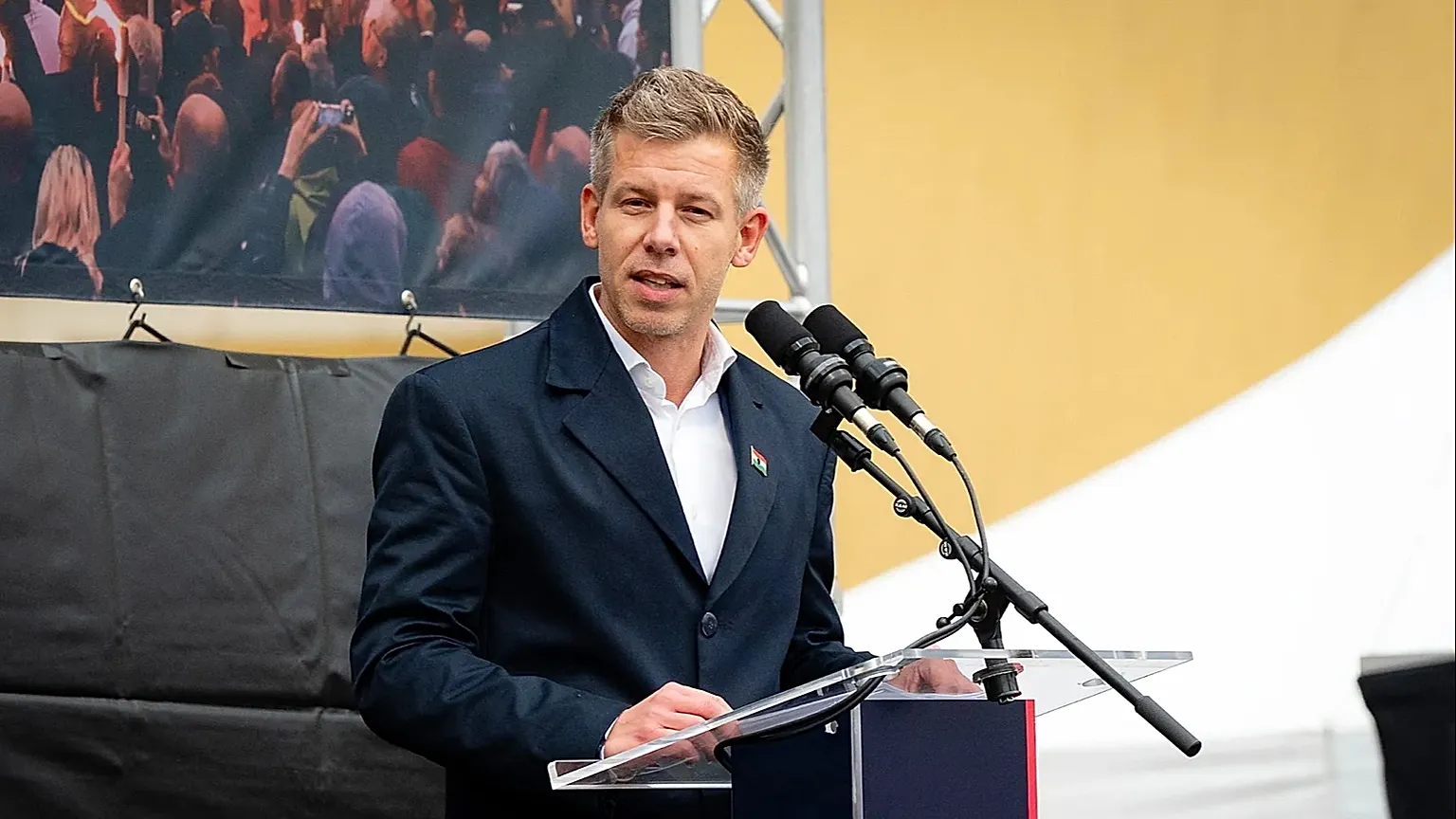
BRUSSELS — Péter Magyar is moving to unlock billions of euros in frozen European Union funding for Hungary after his election victory ended Viktor Orbán’s long rule and opened a narrow window for a political reset with Brussels, May 4, 2026. The incoming Hungarian leader’s challenge is to turn a decisive mandate into rapid legal and institutional reforms before recovery funds tied to EU deadlines slip out of reach.
Magyar, whose Tisza party campaigned on restoring rule of law and rebuilding ties with the EU, has made the frozen money an early test of whether a post-Orbán Hungary can regain credibility in Brussels while delivering quick economic relief at home.
Péter Magyar puts EU funds at the center of Hungary’s reset
The urgency sharpened after Magyar held what he described as “extremely constructive and successful” talks with European Commission President Ursula von der Leyen over the release of blocked funds, according to Reuters reporting on the Brussels meeting. The money has been withheld over concerns about corruption, judicial independence and rule-of-law standards built up during Orbán’s tenure.
The most immediate pressure is the Recovery and Resilience Facility, where Hungary risks losing access to a major share of post-pandemic funds unless it completes required reforms and submits claims before the EU’s 2026 cutoff. The European Commission says all recovery plan milestones and targets must be completed by August 2026 under Hungary’s recovery and resilience plan.
That deadline leaves Magyar little room for symbolic politics. He must move legislation, persuade EU officials that enforcement will be real and reassure Hungarians that the money will not be lost to delay, bureaucracy or the same patronage networks his party accused Orbán of protecting.
Frozen funds became a long-running fight under Orbán
The standoff did not begin with Magyar. In 2022, the European Commission said it would hold back billions in cohesion money until Hungary met conditions linked to judicial independence, academic freedom, LGBTQ rights and asylum policy, as detailed in an older Reuters account of the EU funding freeze. That decision turned EU money into one of the most visible measures of Hungary’s estrangement from Brussels.
The Council of the EU separately agreed in December 2022 to suspend about 6.3 billion euros in budget commitments under the rule-of-law conditionality mechanism, citing concerns over public procurement, prosecutorial action and corruption, according to the Council’s 2022 decision.
Brussels later partially eased pressure after Hungary made judicial changes, but the thaw was limited. The European Commission said in 2023 that some cohesion funds could move forward while other money remained blocked, a distinction laid out in its assessment of judicial independence and EU funding for Hungary.
Election victory gives Péter Magyar power — and raises expectations
Magyar’s political opening came after Tisza defeated Fidesz in the April 12 parliamentary election, ending Orbán’s 16-year rule and giving the new government a commanding majority, according to The Guardian’s report on the Hungarian election result. That majority could help Magyar pass reforms quickly, but it also gives him fewer excuses if the EU money remains blocked.
Brussels is watching whether Magyar will pursue changes that go beyond campaign pledges. Those could include stronger anti-corruption safeguards, judicial guarantees, cleaner public procurement rules and possible cooperation with EU-level prosecutors. The political question is whether Hungary can convince the EU that reforms will survive beyond the first weeks of post-election optimism.
EU officials have already signaled that goodwill alone will not release the funds. Earlier talks between Magyar and EU leaders focused on the need for swift work to meet conditions, while Hungary’s recovery cash remains under a tight timetable, as Euronews reported on the race to save EU funds.
Why Brussels cannot simply hand over the money
For the European Commission, Magyar’s victory creates both opportunity and risk. A fast release of money could reward democratic change and help stabilize Hungary’s economy. Moving too quickly, however, could weaken the EU’s rule-of-law conditions and invite legal or political backlash from member states and lawmakers who argue that funds should be tied to measurable reforms.
That dilemma was visible in the final years of Orbán’s government, when Hungary used veto power on EU issues while Brussels used funding leverage to press for institutional change. An older Reuters analysis of the EU-Hungary money fight described how blocked funds, inflation and budget pressure had turned the dispute into one of Orbán’s toughest challenges.
Magyar now inherits both sides of that conflict: Hungary’s need for the cash and Brussels’ need to prove that conditionality has teeth. His advantage is that EU leaders have a political reason to support a reset. His obstacle is that the rules were designed to require proof, not promises.
Economic pressure makes the clock harder to ignore
Hungary’s economy gives the funding fight domestic weight. EU money has long supported infrastructure, public investment and regional development, and frozen payments have added pressure to a country already strained by weak growth and years of confrontation with Brussels.
Magyar’s government will have to show that unfreezing the funds is not just a diplomatic achievement but a governance shift. That means creating systems that satisfy EU auditors, protect public money and convince Hungarian voters that a new political era will not reproduce the same networks under different names.
The test is therefore larger than one payment request. If Magyar succeeds, Hungary could regain access to badly needed financing while resetting its place inside the EU. If he fails, the Orbán era’s institutional legacy may continue to cost Hungary billions even after Orbán himself has left power.