

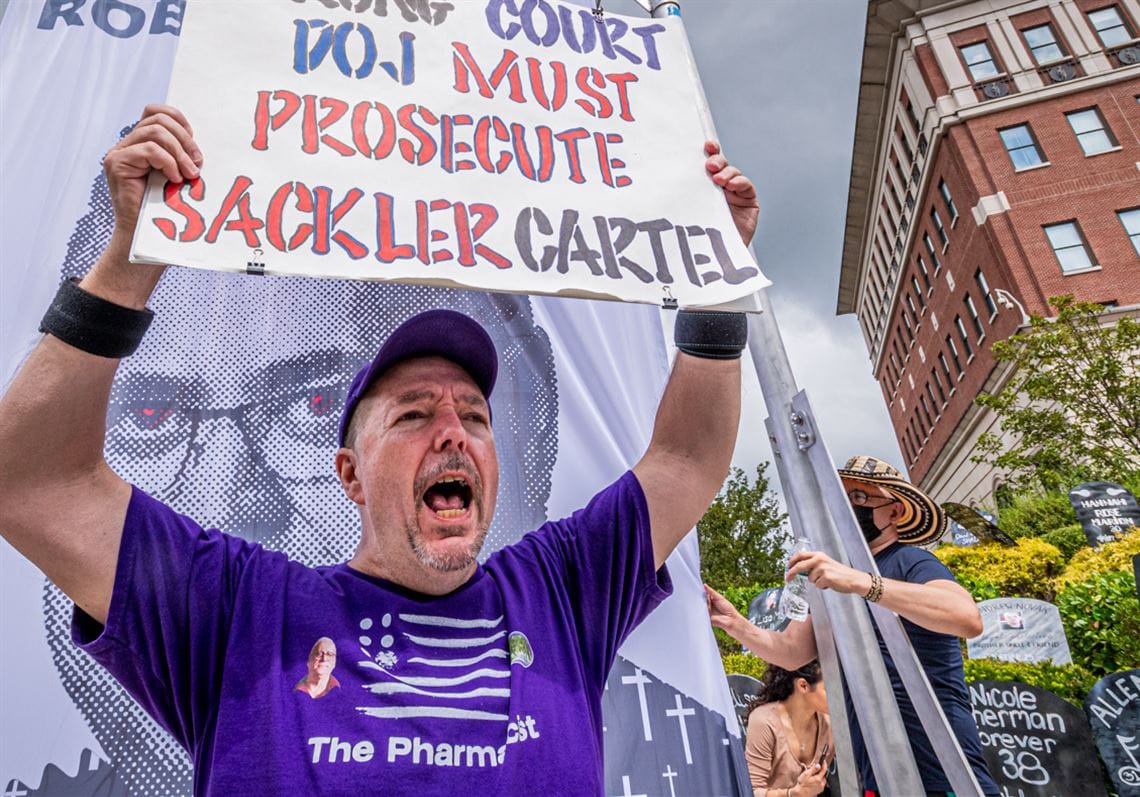
NEW YORK — Purdue Pharma ended operations and completed its bankruptcy Friday as Knoa Pharma began replacing the OxyContin maker under a $7.4 billion settlement designed to send money to victims, governments and opioid-abatement programs. The restructuring dissolves Purdue, strips the Sackler family of ownership and control, and moves the company’s remaining assets into a public-benefit structure intended to fund treatment, prevention and recovery, May 1, 2026.
In announcing the transition, Reuters reported that Purdue had ceased operations and concluded its bankruptcy, with Knoa Pharma overseen by trustees including Rahul Gupta, Paul Rothman and David Saltzman. Knoa will sell overdose-reversal and opioid-use-disorder medicines at or below production cost, while Reuters also reported that about 40% of individual claims had already been rejected.
Purdue Pharma bankruptcy settlement shifts ownership away from the Sacklers
The settlement totals at least $7.4 billion. The New York attorney general’s office said Knoa Pharma LLC will operate in Purdue’s place, owned by the newly established nonprofit Knoa Foundation and overseen by independent directors and trustees unaffiliated with Purdue. The office also said members of the Sackler family are barred from selling opioids in the U.S. and will have no involvement in the new company.
The Associated Press said the settlement money will be paid over 15 years, with most funds going to states and local governments. AP also reported that $865 million is earmarked for individual claimants, roughly $16,000 is the expected maximum payout for people who can show harm from prescribed Purdue opioids, and about 30 million company documents are to be made public.
State officials described the effective date as the end of a long-running legal push. Connecticut Attorney General William Tong said Purdue and the Sackler family were “permanently exiled” from the addiction industry, and his office said Connecticut is expected to receive $64 million over the next 15 years for treatment, prevention and recovery.
How Knoa Pharma plans to confront the opioid crisis
Knoa’s mission is unlikely to quiet all criticism. The company inherits a market built around medicines that can save lives but also a legacy tied to OxyContin and allegations that Purdue played a central role in normalizing high-volume opioid prescribing. Rothman said Knoa is “committed to providing care and saving lives,” but survivors and families will watch whether the new organization’s public-health mandate is matched by transparent distribution and affordable access.
The Purdue deal is only one piece of a broader national settlement landscape. Opioid Settlement Tracker’s global settlement timeline shows how opioid litigation has expanded across drugmakers, distributors, pharmacy chains and consultants, underscoring that the crisis widened far beyond one company.
Older coverage shows how the Purdue Pharma bankruptcy evolved
The settlement’s effective date is the endpoint of a legal arc that began years earlier. In 2019, Purdue filed for bankruptcy protection under pressure from more than 2,600 lawsuits alleging it helped fuel the opioid epidemic. In 2020, the Justice Department said Purdue pleaded guilty to fraud and kickback conspiracies. Then, in 2024, the U.S. Supreme Court blocked an earlier Purdue bankruptcy settlement because it would have shielded Sackler family members from opioid-related lawsuits even though they had not filed for bankruptcy.
What comes next after Purdue Pharma bankruptcy
Legal closure does not erase the public-health burden. Settlement money will move over years, while states and local governments decide how to spend funds and victims navigate individual-claim rules. The central question now is whether Knoa Pharma can separate its public-benefit mission from Purdue’s past — and whether communities see measurable gains in treatment access, overdose prevention and recovery support.


