The latest pullback reflects a market still struggling to price the conflict’s impact on energy costs, inflation expectations and central bank policy. In a global markets report, Reuters said oil climbed above $110 a barrel as the Iran conflict remained at an impasse, while the dollar index rose as the euro and pound slipped. Reuters quoted Nick Rees, head of macro research at Monex Europe, saying the “twists and turns of U.S.-Iran peace negotiations continue to buffet markets.”
EUR/USD forecast: $1.1677 support becomes the line in the sand
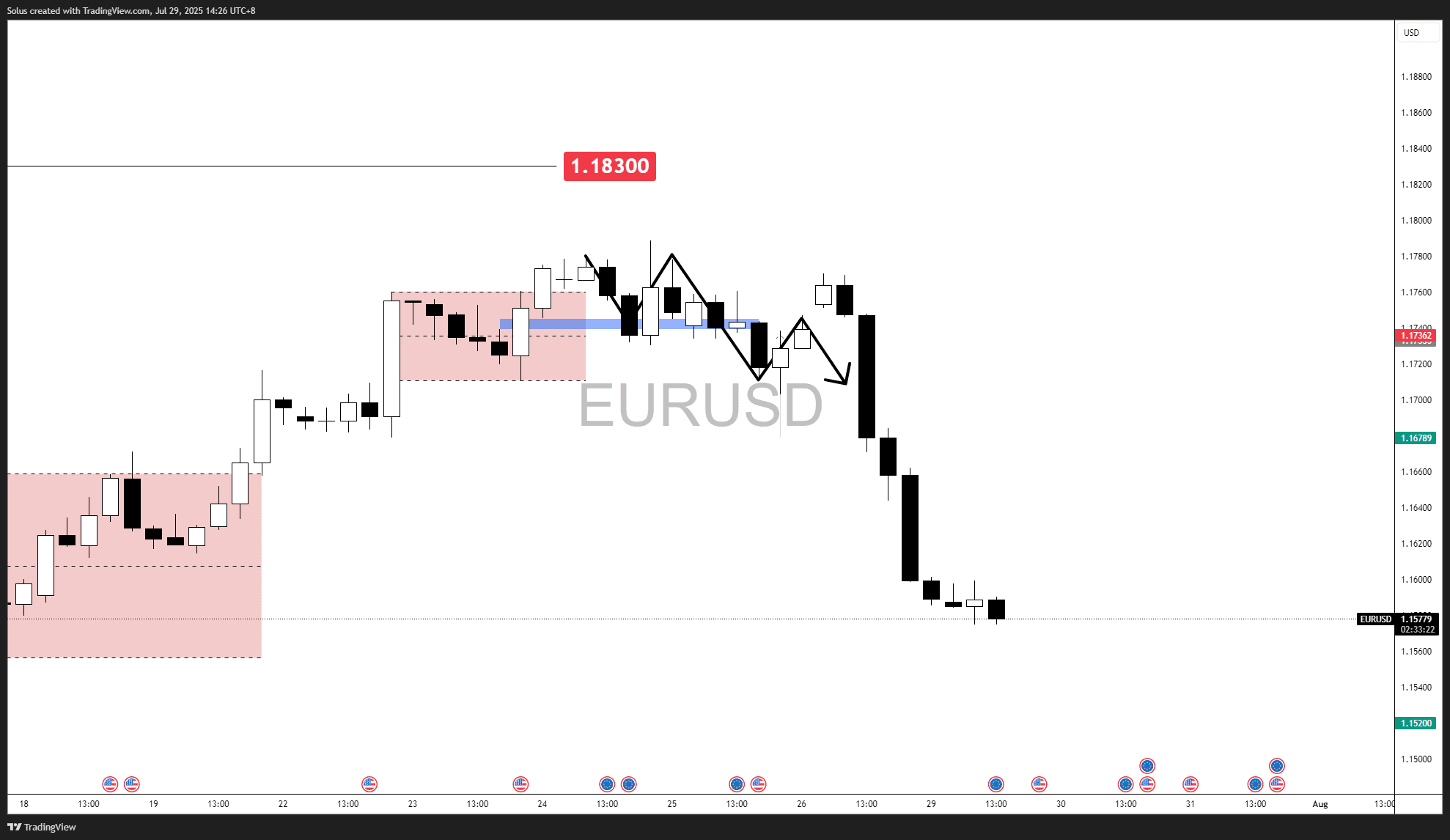
The key technical focus is the 200-day moving average, now sitting at $1.1677. A Reuters technical analysis noted that this level has become a widely watched support point for the euro. As long as EUR/USD holds above it, traders may continue to look for a recovery toward $1.1830, the July 2025 peak, followed by the September 2025 high near $1.1919.
A daily close below $1.1677 would change the tone. It would suggest the euro’s recent resilience is fading and could invite a deeper test of the $1.1600 area, especially if oil prices stay firm and U.S.-Iran talks fail to calm risk sentiment.
Dollar strength is tied to oil, inflation and risk appetite
The dollar’s support is not only about traditional safe-haven flows. Higher energy prices also complicate the inflation outlook, making it harder for central banks to shift toward rate cuts. The Federal Reserve’s March policy statement kept the federal funds target range at 3.50% to 3.75% and said uncertainty about the economic outlook remained elevated, with Middle East developments creating risks on both sides of its mandate.
That stance matters for EUR/USD because a patient Fed can keep U.S. yields supported, limiting euro rallies. If this week’s Fed messaging stays cautious, the dollar could remain difficult to sell even if EUR/USD avoids a decisive breakdown.
Europe’s energy exposure keeps pressure on the euro
The euro also faces its own inflation-growth dilemma. The European Central Bank’s March decision kept its three key rates unchanged and warned that the war in the Middle East had made the outlook significantly more uncertain, creating upside risks for inflation and downside risks for growth.
That trade-off is difficult for euro bulls. If the ECB sounds more hawkish because of energy-driven inflation, the euro may get temporary support from rates. But if higher energy costs damage consumer spending, business confidence and credit conditions, the currency could struggle to sustain gains.
The inflation pressure is already visible. Eurostat’s final March inflation release showed euro area annual inflation rose to 2.6% from 1.9% in February, with energy prices up 5.1% year over year. That keeps the ECB cautious and makes upcoming inflation data critical for the next EUR/USD move.
Older EUR/USD context shows the same fault line
The current EUR/USD forecast did not emerge suddenly. In February, ING warned that EUR/USD could fall toward 1.16 if U.S.-Iran tensions escalated further, arguing that oil shocks restore the dollar’s safe-haven appeal while weighing on energy-importing currencies such as the euro and yen.
By late March, FXStreet’s weekly EUR/USD outlook was already framing the Iran war as the dominant market driver, noting that the pair remained under pressure around the same 200-day moving average zone now back in focus.
Then, in early April, Reuters reported that the dollar weakened after a fragile ceasefire, with EUR/USD rallying as traders unwound wartime safe-haven positions. That episode showed how quickly sentiment can reverse when geopolitical risk appears to ease.
EUR/USD technical outlook
- Bullish case: EUR/USD holds above $1.1677 and rebounds through $1.1830. A close above that level would shift attention toward $1.1919.
- Neutral case: The pair remains trapped between $1.1677 and $1.1830 as traders wait for central bank guidance and clearer Iran headlines.
- Bearish case: A daily close below $1.1677 would weaken the euro’s technical structure and expose $1.1600, with deeper losses possible if oil prices keep climbing.