

LONDON — British activists have spent the past year turning official symbols into punchlines — swapping a monarch’s face for a cartoon character in a gallery and “rebranding” a seaside town one missing letter at a time, Dec. 16, 2025.
The humor is the hook, but the aim is more serious: to force attention onto issues that can be easy to ignore until they’re attached to a viral image, a sharp one-liner and a public blush.
King Charles portrait protest: Wallace, Gromit and a royal headache
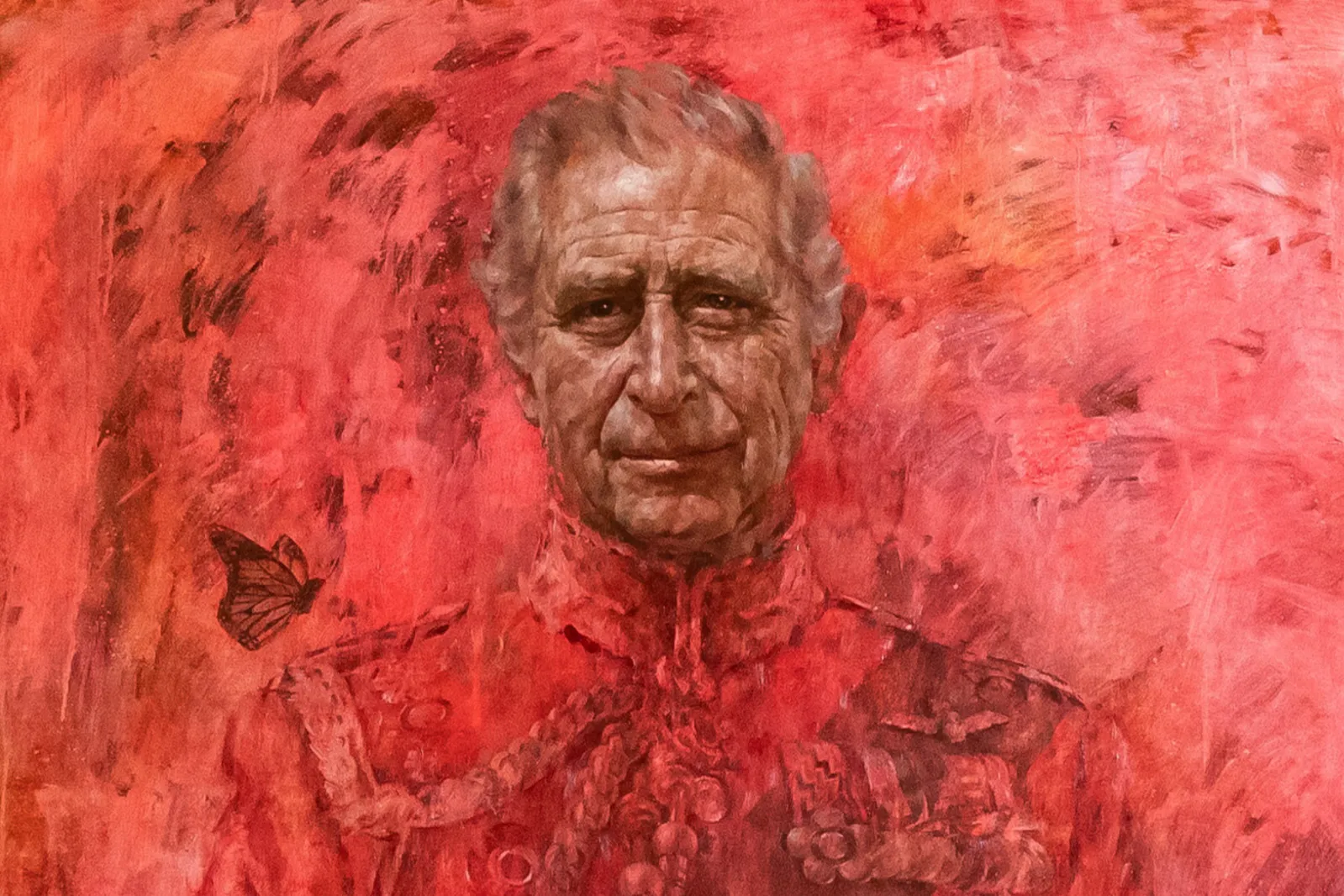
In one of the most meme-ready protest moments of 2024, animal rights activists targeted Jonathan Yeo’s first official painted portrait of King Charles III — not with paint, but with a comedic “overlay.” Two activists associated with Animal Rising stuck an image of Wallace (from “Wallace and Gromit”) over the king’s face and added a speech bubble that read: “No cheese, Gromit. Look at all this cruelty on RSPCA farms.” The Art Newspaper reported the stickers were removed and the gallery said the painting was not damaged.
The activists’ complaint centered on the Royal Society for the Prevention of Cruelty to Animals’ “Assured” scheme — a certification program Animal Rising has criticized — and on the king’s role as a royal patron. The Associated Press described the protest as part of a broader trend of attention-grabbing museum and gallery actions designed to spark headlines with minimal time, money and (sometimes) physical impact.
It’s a neat example of how modern protest can function like a marketing campaign: pick a culturally familiar image, attach a legible message, and ensure the clip travels faster than a press release ever could.
Poole’s ‘Poo’ signs: toilet humor with a sewage message
Far from the art world, a different kind of joke landed on the south coast of England: signs around Poole were altered so the town read as “Poo” — a deliberately childish gag with a pointed environmental punchline. The campaign was tied to anger over sewage pollution and storm overflow discharges, and it leaned on the kind of deadpan simplicity that’s hard to scroll past.
Local reporting said Bournemouth, Christchurch and Poole council staff were sent out to remove stickers and restore altered signage after the “Poo Harbour” rebrand popped up across town. In an Aug. 14, 2024, story, the Purbeck Gazette detailed the cleanup, including a council official’s public response and a statement from Wessex Water about overflows and investment plans.
The brilliance (and the risk) of the stunt is that it works on two levels at once: it’s funny enough to share without context, but the punchline doesn’t fully land until you learn what it’s really about.
Why these pranks work: shame travels faster than policy
These stunts also tap into a truth that activists and politicians understand equally well: embarrassment is a powerful accelerant. A technical argument about wastewater infrastructure or farm assurance labeling can be complicated; a photo of “Poo Harbour” or a king’s portrait with a cartoon face is instantly understood.
And the sewage issue, in particular, has become fertile ground for visual protest — right down to inflatable props. A Guardian report on nationwide demonstrations described protesters waving inflated “poops” and cited official statistics showing more than 464,000 sewage spills in England’s rivers and coastlines in 2023.
But there’s a tightrope here: when a prank involves public property, a historic object or staff forced into cleanup mode, sympathy can swing the other way. The best-known “successful” pranks often try to leave little or no lasting damage — allowing the joke to sting without destroying the thing being used as a billboard.
A long British lineage of mocking the powerful
As modern as these viral moments feel, Britain has a deep tradition of political mischief that treats authority as a target — and sometimes as a stage.
1910: The Dreadnought hoax. A group linked to the Bloomsbury set famously duped the Royal Navy into hosting them aboard HMS Dreadnought while disguised as foreign dignitaries — an episode revisited in a 2012 Guardian account that underscores how long British prank culture has been intertwined with status and spectacle. (It’s also a reminder that some “comedy” from that era relied on offensive disguises that do not age well.)
The 1980s: sewage rebels and the “Thatcherloo.” Long before “Poo” signs became a modern calling card, environmental campaigners were already using theatrical stunts to force attention onto polluted water. Outdoor Swimmer magazine recounted the Sons of Neptune’s eccentric campaign against sewage dumping, including actions that made them infamous — and later a subject for a film.
2022: “protest pong.” Even the Liz Truss era produced its own scatological protest art: The Independent reported on a street artist using fake “poos” and tiny signs to lampoon political leadership with a joke that was impossible to miss — or unknow once you’d seen it.
The joke is the delivery system
From the King Charles portrait protest to Poole’s “Poo” signs, the pattern is consistent: a prank is rarely “just” a prank anymore. It’s a delivery system — for anger, for grief, for disgust, for moral argument — wrapped in something shareable.
Whether these stunts change policy is harder to measure than whether they change the conversation. But as long as power depends on ceremony, branding and image management, activists will keep looking for the fastest way to puncture it — ideally with a laugh loud enough that everyone turns to look.


