

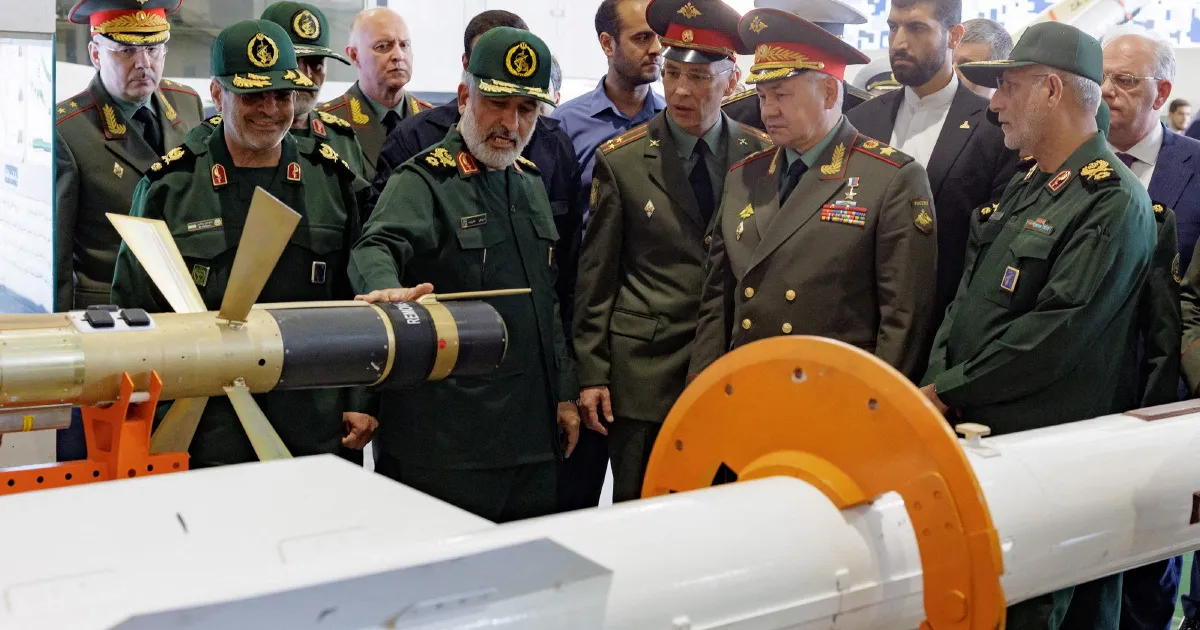
Iran has agreed to a secret €500 million arms deal with Russia to acquire thousands of advanced shoulder‑fired missiles, deepening military cooperation between the two sanctioned states amid rising regional tensions and unfolding nuclear negotiations. The pact, revealed by leaked documents and sources familiar with the agreement, marks a significant step in Tehran’s efforts to rebuild its air defenses.
Details of the Iran Russia missile deal
According to reporting by Reuters, the contract was signed in Moscow in December and obligates Russia to deliver 500 man‑portable “Verba” launch units and 2,500 9M336 infrared‑guided surface‑to‑air missiles over a three‑year period from 2027 to 2029. The Verba system is among Russia’s most modern shoulder‑fired air‑defense weapons, designed to counter low‑flying aircraft, drones and cruise missiles.
The agreement was negotiated between Rosoboronexport, the Russian state arms exporter, and a representative of Iran’s Ministry of Defense and Armed Forces Logistics (MODAFL). Tehran formally requested the systems last July, soon after its air‑defense infrastructure was significantly degraded during last year’s conflict with Israel, which included U.S. strikes on Iranian nuclear facilities.
Context of Expanding Moscow‑Tehran Military Ties
This latest Iran Russia missile deal follows a broader pattern of expanding defense cooperation. In May 2025, Iran’s parliament approved a 20‑year strategic partnership with Russia aimed at enhancing military and economic ties, though it did not include a mutual defense clause — a move that signaled long‑term alignment between the two nations despite Western objections (Reuters, May 21, 2025).
Even earlier, in May 2025 Western and regional sources reported plans by Iran to send Fath‑360 short‑range ballistic missile launchers to Russia — a development that, if implemented, would underscore the increasingly transactional nature of their military relationship (Reuters, May 9, 2025).
Regional and International Reactions
Analysts say the deal complicates U.S. and allied efforts to deter Tehran’s nuclear ambitions and could hinder negotiations in Geneva later this week. The Biden administration’s hardline successor has assembled additional U.S. forces in the Middle East to pressure Iran into accepting nuclear constraints, and the new missile acquisition could bolster Tehran’s defensive posture.
Western officials have cautioned that supplying advanced air‑defense systems to Iran may lead to further sanctions on Russian defense firms and Iranian intermediaries tied to the contract. Moscow, for its part, frames the agreement as a routine defensive purchase that does not violate international arms embargoes.
Despite heightened scrutiny, Tehran has publicly maintained that its defense procurement is sovereign and defensive in nature, aimed at countering what it describes as “external threats” to its borders and critical infrastructure.


