

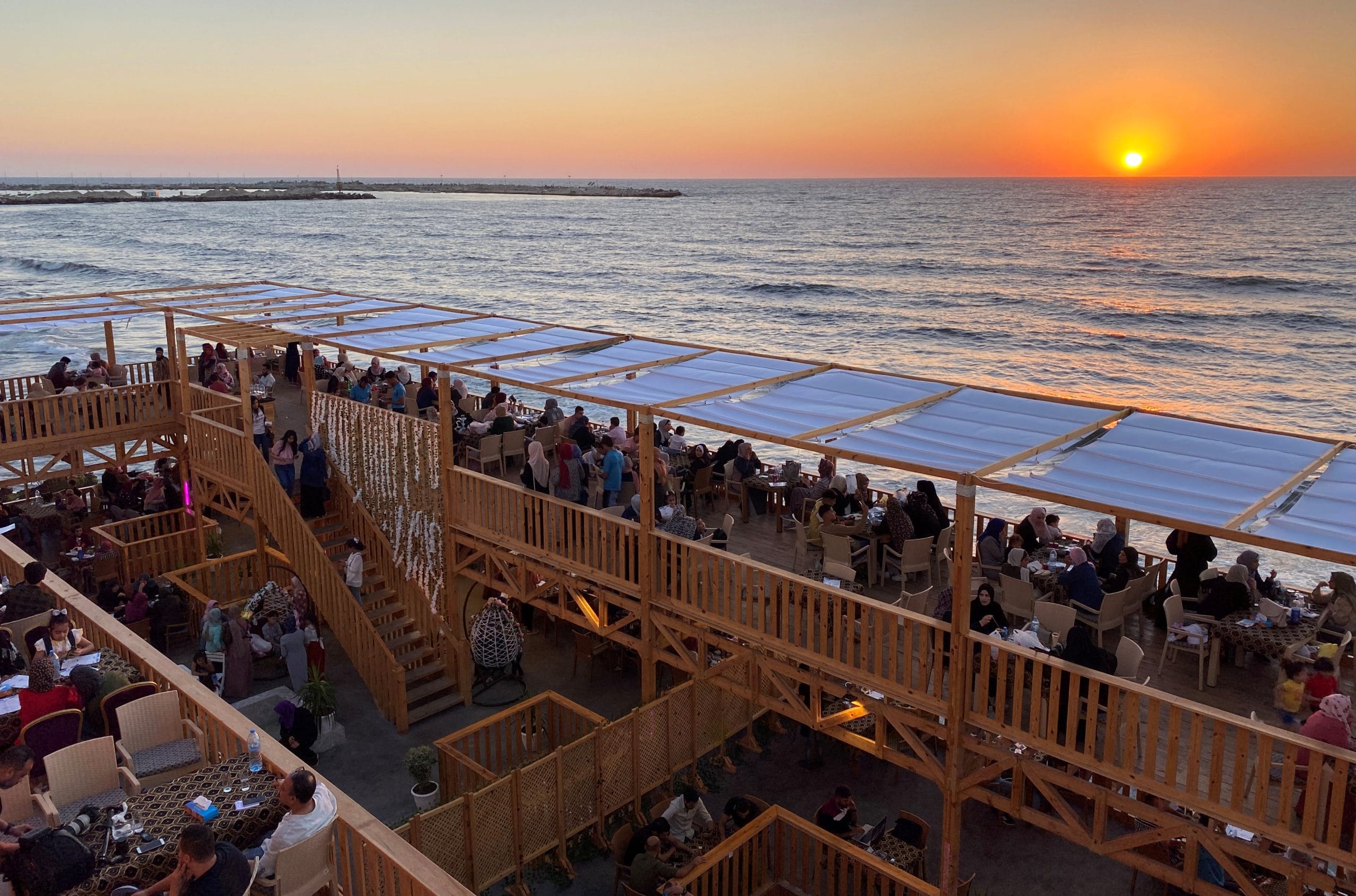
DEIR AL-BALAH, Gaza Strip — New cafes and restaurants in Gaza City are highlighting a widening wealth gap across the Gaza Strip in early May as displaced families struggle to find water, food and steady income. The businesses are thriving in pockets because cash, imported goods and generator power are concentrated among a small group, while aid agencies say most residents remain dependent on assistance and vulnerable to shortages, May 3, 2026.
Gaza cafes become a symbol of a divided recovery
The new storefronts are real, but they do not tell the full story. In an Al Jazeera essay by Gaza writer Eman Abu Zayed, the writer described expensive, polished cafes standing amid rubble and displaced families, saying a modest restaurant order cost more than three times what it did before the war.
Her account reflects a broader economic split. Some residents with access to cash can buy meals, coffee or internet access, while many others live in tents, lack potable water and cannot afford basic food. The result is a cityscape where generator-lit cafes can look like recovery from the outside but feel like exclusion to those standing nearby.
That contradiction was also documented when The National reported on Gaza’s shift from factories to retail, describing cafes, restaurants and supermarkets opening as workshops, farms and small industries remained destroyed or unable to restart. Economic analyst Ahmed Abu Qamar told the outlet that Gaza’s visible retail growth was “economic distortion,” not real development.
Water lines and food lines define daily life
For most families, the most urgent economy is still the search for essentials. A recent Associated Press report on Gaza’s water shortage found that about 80% of people rely on trucked water, while the United Nations says nearly 90% of the enclave’s water infrastructure was destroyed. Israel says it no longer limits water imports and that pipelines can provide enough water; aid groups say restrictions on pipes, fuel, cement and water-treatment supplies continue to slow repairs.
Food access remains fragile as well. The World Food Programme says at least 1.6 million people, or 77% of the analyzed population, face high levels of acute food insecurity. WFP says it is reaching more than 1 million people each month through food parcels, bread, hot meals and school meals, but warns that progress against famine remains fragile.
The pressure is visible in markets and camps. An April humanitarian update from OCHA said supply movements into Gaza were disrupted by crossing constraints and other delays, while many displacement sites reported skin diseases, rodents and pests. OCHA also cited WFP findings that more than half of surveyed residents were still burning waste as an alternative to cooking gas in March.
Older reporting shows how the divide grew over time
The cafe story has changed throughout the war. In July 2024, Anadolu reported on a Gaza cafe opened to provide electricity and internet for students, journalists and remote workers who had lost access to basic services.
By February 2025, The Guardian documented rare restaurant reopenings in Khan Younis, where families used meals out as brief relief from displacement and trauma even as food remained scarce and expensive.
By August 2025, the meaning of those images had shifted again, as The Guardian reported that social media posts of Gaza cafes were being used to argue that hunger was exaggerated, despite U.N.-backed warnings about severe food insecurity. The continuity matters: cafes first became places to charge phones and work, then rare spaces for emotional relief, and now symbols of an economy divided between those who can still pay and those who cannot.
A fragile normal life for the few
For Gaza residents with savings, salaries or access to remittances, cafes and restaurants can offer a short escape from the ruins outside. For those without income, they are evidence that markets can reopen without restoring fairness, jobs or basic security.
The wealth gap is not just about who can buy coffee. It is about who can buy bottled water, who can pay inflated food prices, who can reach a generator-powered room, and who must wait for aid, water trucks or a community kitchen. Until water systems are repaired, food supply is stable, and livelihoods return beyond retail and survival trade, the glow of Gaza’s new cafes will remain a thin layer over deep deprivation.


